
When evaluating the worth of a twenty-dollar gift card, it is essential to understand that the term "exchange rate" can be interpreted in several ways depending on whether the user is purchasing goods or trading the card for cash. For a consumer redeeming the card for digital products or services, the fundamental rate is a fixed one-to-one conversion, meaning the 20 dollars stored on the card allows for the purchase of items priced exactly at that value. However, when the card is converted into a different currency or traded on a secondary market, the rate fluctuates based on supply and demand, regional market liquidity, and the specific platform facilitating the transaction. It is crucial for users to distinguish between the face value of the card and its market liquidity, as a 20-dollar card is rarely worth its full amount when sold for immediate fiat currency.
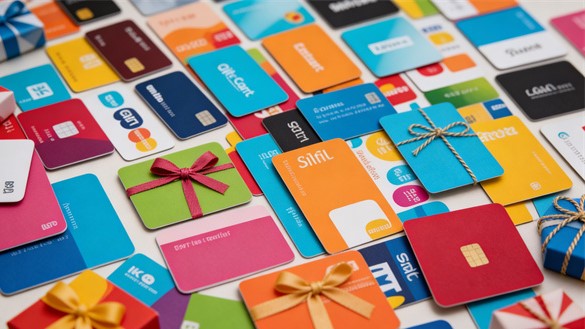
From a technical perspective, the valuation of these cards involves complex algorithms that assess the risk and profitability of a transaction. Platforms that facilitate the exchange of gift cards often apply a markup or markdown to the standard exchange rate to cover operational costs, fraud prevention measures, and liquidity maintenance. Consequently, the "rate" for a 20-dollar card will often appear as a percentage of its total value, such as 85% or 90%, rather than a direct currency conversion. This means that while the physical card contains 20 dollars, the actual monetary equivalent received by the seller may vary significantly based on the prevailing economic conditions and the specific fees inherent to the chosen exchange service.
To maximize the utility of a 20-dollar gift card, one must look beyond the nominal value and consider how it fits into broader financial strategies. Users should analyze the exchange rates offered by different platforms to find the highest return for their specific type of card and region. Additionally, keeping track of currency fluctuations can help determine the optimal time to sell or trade, as a stronger local currency against the card's underlying currency will affect the purchasing power. Understanding these dynamics allows an individual to convert a simple gift card into a more tangible asset without falling prey to low-ball offers or unfavorable conversion rates that reduce the card's overall potential value.